Igriva skulptura na Placu
Igriva skulptura na Placu
18. 11. 2025
1826
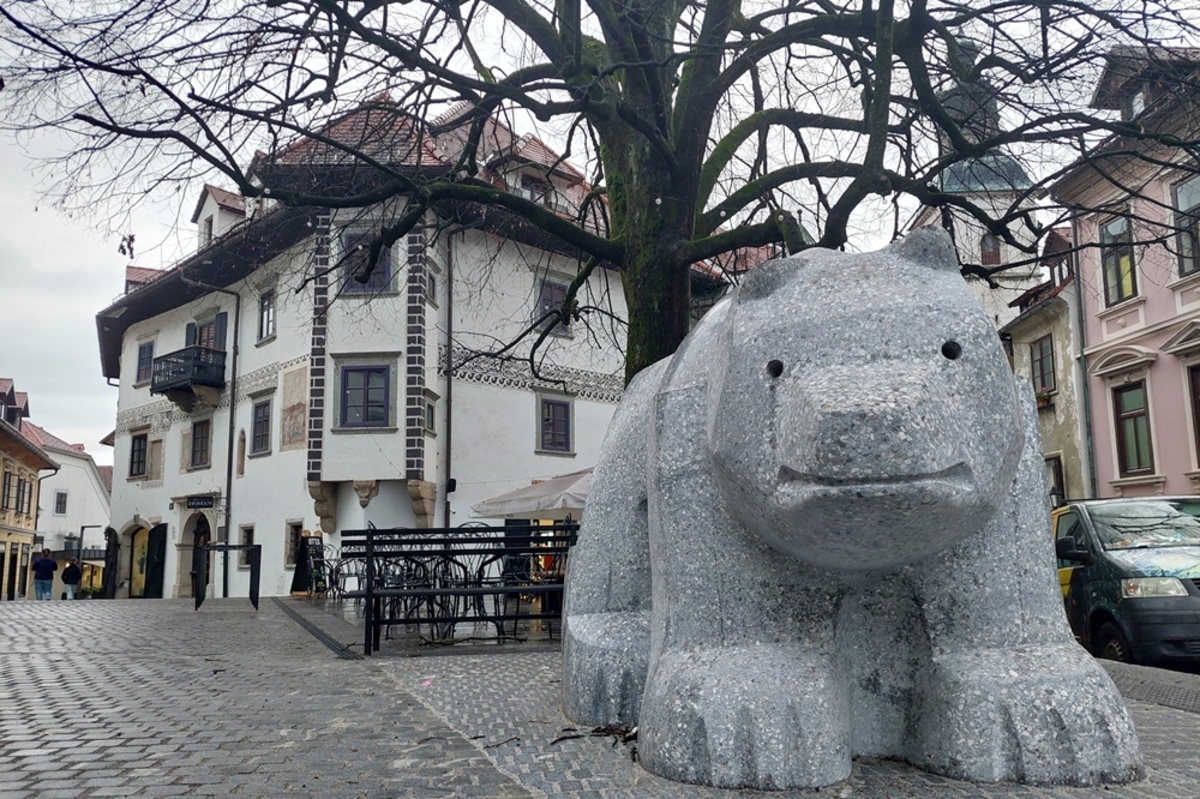
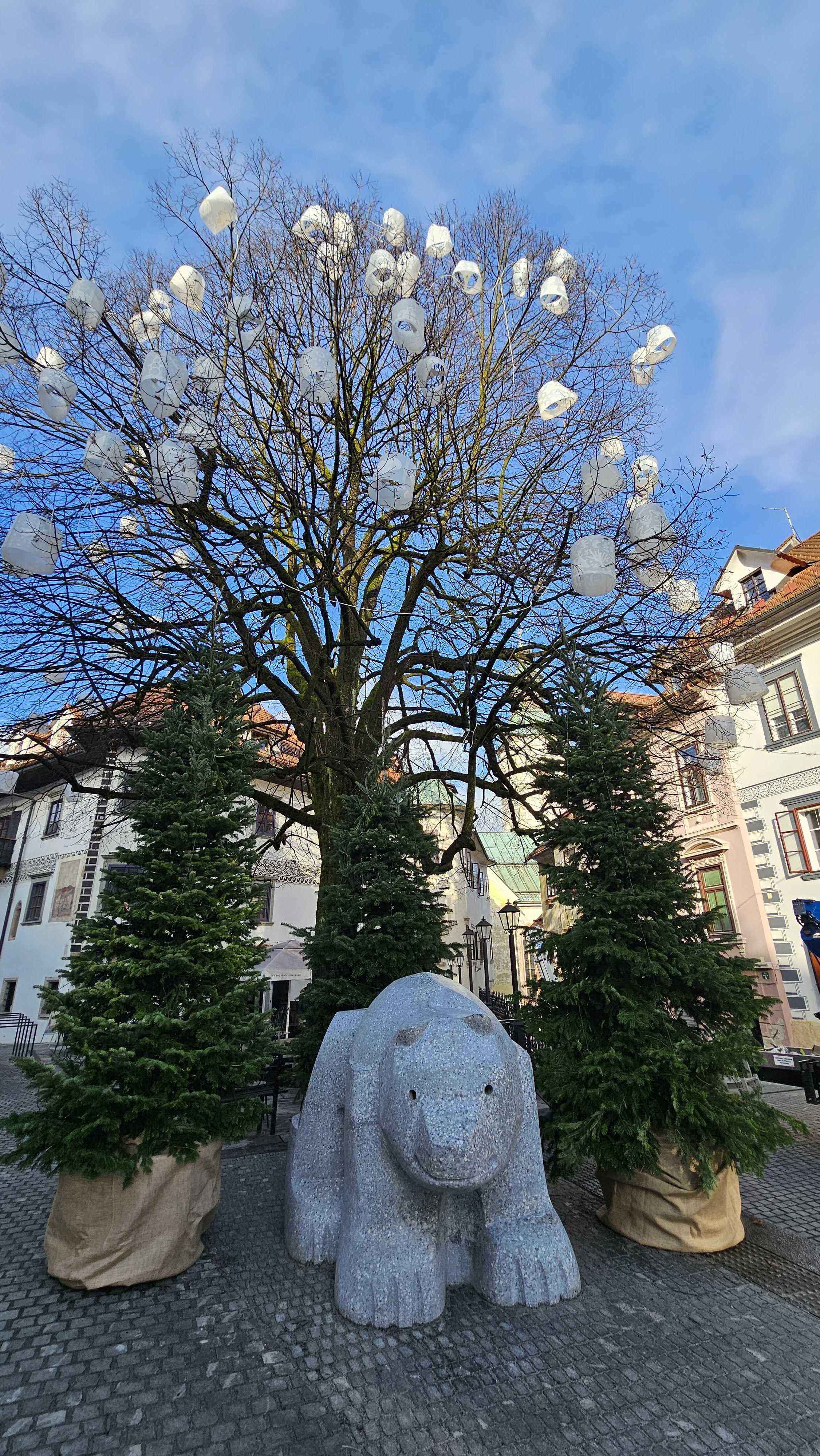
Na Mestnem trgu stoji nova skulptura medveda, ki prepleta loško izročilo in sodoben izraz. Njegova prisotnost je v prvih dneh privabila številne otroke, ki v novem prebivalcu Placa vidijo priložnost za raziskovanje in domišljijo. Še več, prav otroci so medveda oziroma medvedko poimenovali – Loki. V Škofji Loki torej po novem živi tudi Loki.
Skulptura medveda, ki je sestavni del projekta celovite obnove mestnega središča, stoji na mestu, kjer se razpira pogled na teraso Homanove hiše. Prostor je bil doslej po besedah avtorja in projektanta brez jasne identitete, s postavitvijo skulpture pa je dobil simbolni poudarek in pripoved, ki jo Škofja Loka pozna že stoletja. Medved namreč ni le figura, ampak neposreden odmev legend, ki so zaznamovale nastanek mesta.
Motiv medveda najdemo v dveh pomembnih legendah. Prva je povezana s škofom Abrahamom iz Freisinga in loškim zamorcem, ki je škofu rešil življenje, ter s tem prispeval k nastanku loškega grba. Druga izhaja iz Freisinga, kjer legenda o svetem Korbijanu govori o medvedu, ki ga ima mesto s katermi smo povezani že več kot 1000 let v grbu.
Preplet teh pripovedi ustvarja bogato simboliko, ki jo skulptura prevede v sodoben, igriv izraz. Medved tako ni več strašljiva figura iz gozda, ampak prinašalec spoznanja, simbol sobivanja in nova točka srečevanja in druženja. Videti je, kot da je stopil iz zelenega zaledja Homanove hiše in se pridružil mestnemu življenju, še pravi avtor in projektant in dodaja, da je skulptura izdelana iz brušenega betona z dodanimi pigmenti in lomljenimi prodniki. »Njene barve se navezujejo na novo tlakovanje trga, oblika pa je nežno stilizirana, da ne tekmuje z zgodovinskimi poudarki prostora. Dopolnjuje ga kot sodoben element, ki posreduje med preteklostjo in sedanjostjo.«
Otroci so nov lik prijaznega medveda na Placu v trenutku vzeli za svojega. Obiskovalci in obiskovalke že opažajo, da se okoli njega hitro zbirajo najmlajši in da je prostor postal živahnejši, igrivejši, bolj pisan. Kot pri znani ljubljanski Tivolski ribi tudi tu objekt spontano zaživi predvsem skozi otroško domišljijo.
Z umestitvijo skulpture se simbolno sklene zgodba, ki se je začela v Freisingu, nadaljevala s škofom Abrahamom in zamorcem ter zdaj dobiva novo, sodobno obliko v središču Škofje Loke. Legende tako ponovno zaživijo tam, kjer se srečujejo ljudje, koraki in spomini. Igrišče Zamorc le nekaj korakov stran pa nas povede v drugi del legende.
Saj na drugem koncu mesta, na igrišču pod gradom, kovinski relief že oživlja like iz omenjene legende, a v njem ni neposrednega motiva medveda. Nekako prisoten je s svojo odsotnostjo. »Zdaj je zgodba našla še svoj manjkajoči del – in trg svoje ravnovesje. V skulpturi se združita narava in mesto, legenda in sodobnost, kamen in igra,« izpostavlja avtor in projektant.
Pri poimenovanju so sodelovali učenke in učenci vseh štirih osnovnih šol skupaj s svojimi učitelji in učiteljicami, ki so predlagali 20 imen. Med njimi je na javnem glasovanju izstopalo eno ime, ki je med 898 dobil skoraj polovico glasov, že v osnovi pa so ga predlagali s kar treh šol. In tako je medved_ka postal_a Loki.
Avtorsko zasnovo trga in umestitev skulpture podpisuje arhitekturni biro Ravnikar Potokar. Avtorska zasnova skulpture je delo akademskega kiparja Boštjana Drinovca, izvedbo pa je izvedlo podjetje Žurbi team, d. o. o.
Morda pa nam medved, ki je v hipu navdušil številne otroke, sporoča še, da bi morali tudi odrasli včasih znova poiskati otroka v sebi.
_ _ _ _ _
Playful sculpture
A new sculpture of a bear now stands in the town square, intertwining Loška with tradition and modern expression. In its first few days, it attracted numerous children, who see the new resident of Placa as an opportunity for exploration and imagination. What's more, it was the children who named the bear – Loki. So now Loki also lives in Škofja Loka.
The bear sculpture, part of a comprehensive renovation project of the town center, is situated overlooking the terrace of the Homan House. According to the author and designer, the space previously lacked a clear identity, but with the installation of the sculpture, it has gained a symbolic emphasis and a narrative that Škofja Loka has known for centuries. The bear is not just a figure; it is a direc echo of the legends that shaped the town´s origins.
The bear motif appears in two important legends. The first is connected with Bishop Abraham of Freising and the black man of Loška, who saved the bishop's life and thus contributed to the creation of the Loška coat of arms. The second originates from Freising, where the legend of Saint Corbinian tells of a bear featured in the coat of arms of the town with which Škofja Loka has been connected for over 1,000 year.
The intertwining of these stories creates rich symbolism, which the sculpture translates into a contemporary, playful expression. The bear is no longer a frightening figure from the forest, but a bringer of knowledge, a symbol of coexistence and a new meeting and socializing point.
It looks as if it has stepped out of the green hinterland of Homan's house and joined city life, says the author and designer, adding that the sculpture is made of polished concrete with added pigments and broken pebbles. "Its colors are linked to the new paving of the square, and its shape is gently stylized so as not to compete with the historical features of the space. It complements it as a contemporary element that mediates between the past and the present."
Children immediately embraced the friendly bear on the square as their own. Visitors have already noticed that the youngest gather around it quickly , making the space livelier, more playful, and more colorful. As with the famous Tivoli Fish in Ljubljana, here too the sculpture comes to life spontaneously , primarily through children's imagination.
The placement of the sculpture symbolically concludes a story began in Freising, continued with Bishop Abraham and the Moor, and now takes on a new, contemporary form in the center of Škofja Loka. Legends thus come alive again, where people, footsteps, and memories meet. The Zamorc playground, just a few steps away, takes us to the second part of the legend.
At the other end of town, on the playground below the castle, a metal relief already brings the characters from the aforementioned legend to life, but there is no direct motif of a bear in it. It is somehow present through its absence. "Now the story has found its missing piece – and the square has found its balance. The sculpture combines nature and the city, legend and modernity, stone and play," emphasizes the author and designer.
Pupils from all four primary schools participated in naming the sculpture, alongside with their teachers, who suggested 20 names. One name stood out in the public vote, receiving almost half of the 898 votes cast and having been suggested by three schools. And so, the bear became Loki.
The original design of the square and the placement of the sculpture was created by the architectural firm Ravnikar Potokar. The sculpture itself was designed by academic sculptor Boštjan Drinovec and executed by the company Žurbi Team, d. o. o.
Perhaps the bear, which instantly delighted so many children, is also a gentle reminder that adults, too, should sometimes rediscover their inner chiled.